





Slayd 1
CROSS CULTURAL COMMUNICATION
Slayd 2
Intercultural communication and Language Teaching
Slayd 3
Linell Davis` five metaphors about culture:
Culture is like an iceberg some is visible (history, literature,customs) most is invisible (feelings and attitudes)
Culture is our software physical selves as the hardware, become human when programmed with the software of culture
Culture is like the water a fish swims in notice everything except the water
Culture is the story we tell ourselves about ourselves people tell stories to tell who they are and stories also change to adapt to changing circumstances
Culture is the grammar of our behavior people learn their cultural grammar unconsciously and apply them automatically in order to behave appropriately in any society
What is Culture?
Slayd 4
CULTURE
Group which shapes a person values and identity.Culture is formed:
Race
Ethnicitiy
Gender
Class & Religion
Country of origin
Geographic region
Slayd 5
CROSS – CULTURAL COMMUNICATION
Cross-cultural communication is a field of study that looks at how people from differing cultural blackgrounds communicate, in similar and different ways among themselves, and how they endeavor to communicate across cultures.
Slayd 6
01
CROSS CULTURE
Age
02
Value
Customs
03
Gender
04
Ethnacity
Country
05
06
Slayd 7
It is known that in teaching a foreign language it is important to develop not only the language skills of students, but also their intercultural communication competence. Intercultural communication, international cultural competence, differences between cultures play an important role in language learning and teaching, and extra-linguistic aspects of intercultural communication (worldview, rituals, customs, human language, taboos, stereotypes, the role of society in multiculturalism,
image, symbols) it is important to use culturally appropriate features in communication (greetings, ways of expressing politeness, ways of addressing, idioms, etc.) as well as to explore aspects of another language culture.
Slayd 8
Important to companies due to the growth of global business, technology, and the Internet.
Language differences, High-Context vs. Low-context cultures, Non-Verbal differences and power distance are major factors affect cross-ccultural communication
Understanding of how people from different cultures speak, communicate and perceive the world around them
Slayd 9
WHY IS IT IMPORTANT?
Business Opportunities
Job Opportunities
Sharing of views and ideas
Talent Improvisation
Understanding of Diverse Market
Slayd 10
VERBAL COMMUNICATION
Use of sounds and words t oexpress yourself.
Includes:
Face-Face Communication
Telephone Communication
Radio / TV
Slayd 11
NON-VERBAL COMMUNICATION
Communication through sending and receiving wordless clues.
Includes:
Eye-contact
Gestures
Touch
Voice (paralaguage)
Slayd 12
EYE-CONTACT
Some cultures, looking people in the eyes is honesty and straight forwardness & in othersit is seen as challenging and rude
Slayd 13
In US, if you have good eye contact with a person, it generally signifies that you are interested in the person.
In Middle East, eye contact is much less common and considered less appropriate.
In many Asian, African and Latin American cultures, extended eye contact can be taken as an affront or a challenge of authority.
In Western Europe, it is considered proper and polite to maintain almost constant eye contact with another person.
Slayd 14
A movement of part of the body, especially a hand or the head, to express an idea or meaning.
GESTURES
Slayd 15
COLORS
A single color can have many different meanings in different cultures..
In Asia orange is a positive, spiritually enlightened and life-affirming color.
In US it is a color of road hazards, traffic delays, and fast-food restaurants.
Green is considered the traditional colour of Islam. It is also the national colour of Egypt
Green is a symbol of Ireland; green is a strong trend in the Irish holiday
St. Patrick’s Day
White is the traditional colour of bridal dresses in Western cultures/
China: blue-coloured gifts are associated with death.
Slayd 16
Traditional clothing is an important part of a region is history and identity.
Men tend not to wear suit jackets and ties in Colombia and the Middle East.
The traditional dress for an Indian woman is a Sari
Gulf countries woman’s have to wear Pardha & compulsory for every women who visits Saudi
Western Countries, the woman’s can wear what they want
CLOTING
Slayd 17
GREETING
Bow is the customary greeting in Japan.
Westerner’s always start with a handshake.
Most Latinos are more accustomed to physical contact. Even people who know each other only slightly may embrace when greeting.
People from France, Spain, Italy and Portugal greet friends by kissing on both cheeks.
Indian’s usually collide their hands for greeting others.
Slayd 18
BLOCKS TO CULTURAL COMMUNICATION
Ethnocentrism: Inability to accept another cultures world view. Ex: “my way is the best way”
Discrimination; Treatmento to an individual due to minority status, actual & perceived. Ex: “we just aren’t equipped to serve people like that”.
Stereotyping: Generalizing about a person. Ex:”she’s like that … because she is Asian.
Slayd 19
IMPROVING GROSS-CULTURAL COMMUNICATION
Overcome Ethnocentrian
Recognize Cultural Variation
Learn about Cultures
Remove Language Barrier
Help others adapt to our culture
Write & speak clearly
Improve Communication Skill
Listen Carefully
Respect Style Preferences
Slayd 20
TIPS FOR EFFECTIVE CROSS-CULTURAL COMMUNICATION
Slow Down
Avoid Negative Questions
Separate Questions
Take Turns
Write it Down
Be Supportive
Check Meanings
Avoid Slang
Maintain Etiquette
Watch the Humor
Slayd 21
Make a list of images from your home culture and try to explain what they express about who the people of your culture are and what their relationship is to people from other cultures. Which image do you prefer? Which do you think are the images that most truly express how people feel about themselves and the world?
Warming Up:
Slayd 22
THANK YOU FOR YOUR ATTENTION!
Follow us in social media!
Slayd 23
Foydali havolalar
🛒 Barcha taqdimotlar | 📰 Yangiliklar | ℹ️ Biz haqimizda
Tegishli mahsulotlar


CASE STUDY METHOD IN TEACHING mavzusidagi tayyor PPTX taqdimot. Ingliz tili darsi uchun mavzu, misollar va asosiy tushunchalar jamlangan.
- Slaydlar soni: 36 ta
- Fayl formati: PPTX
- Tili: o‘zbek tili
- Kategoriya: Ingliz tili

ACCURACY AND CORRECTING MISTAKES mavzusidagi tayyor PPTX taqdimot. Ingliz tili darsi uchun mavzu, misollar va asosiy tushunchalar jamlangan.
- Slaydlar soni: 24 ta
- Fayl formati: PPTX
- Tili: o‘zbek tili
- Kategoriya: Ingliz tili


STRATEGIES FOR READING COMPREHENSION mavzusidagi tayyor PPTX taqdimot. Ingliz tili darsi uchun mavzu, misollar va asosiy tushunchalar jamlangan.
- Slaydlar soni: 33 ta
- Fayl formati: PPTX
- Tili: o‘zbek tili
- Kategoriya: Ingliz tili

ASSESSMENT CHECK EVALUATE mavzusidagi tayyor PPTX taqdimot. Ingliz tili darsi uchun mavzu, misollar va asosiy tushunchalar jamlangan.
- Slaydlar soni: 22 ta
- Fayl formati: PPTX
- Tili: o‘zbek tili
- Kategoriya: Ingliz tili


DESCRIBING PEOPLE mavzusidagi tayyor PPTX taqdimot. Ingliz tili darsi uchun mavzu, misollar va asosiy tushunchalar jamlangan.
- Slaydlar soni: 33 ta
- Fayl formati: PPTX
- Tili: o‘zbek tili
- Kategoriya: Ingliz tili
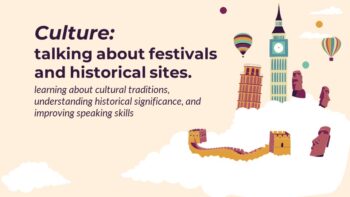
CULTURE. TALKING ABOUT FESTIVALS AND HISTORICAL SITES mavzusidagi tayyor PPTX taqdimot. Ingliz tili darsi uchun mavzu, misollar va asosiy tushunchalar jamlangan.
- Slaydlar soni: 29 ta
- Fayl formati: PPTX
- Tili: o‘zbek tili
- Kategoriya: Ingliz tili


ASSESSMENT AND TESTING IN THE CLASSROOM mavzusidagi tayyor PPTX taqdimot. Ingliz tili darsi uchun mavzu, misollar va asosiy tushunchalar jamlangan.
- Slaydlar soni: 37 ta
- Fayl formati: PPTX
- Tili: o‘zbek tili
- Kategoriya: Ingliz tili


ESSAYS. DIFFERENT TYPES OF ESSAYS IN IELTS WRITING mavzusidagi tayyor PPTX taqdimot. Ingliz tili darsi uchun mavzu, misollar va asosiy tushunchalar jamlangan.
- Slaydlar soni: 31 ta
- Fayl formati: PPTX
- Tili: o‘zbek tili
- Kategoriya: Ingliz tili

CANADA mavzusidagi tayyor PPTX taqdimot. Ingliz tili darsi uchun mavzu, misollar va asosiy tushunchalar jamlangan.
- Slaydlar soni: 54 ta
- Fayl formati: PPTX
- Tili: o‘zbek tili
- Kategoriya: Ingliz tili
METHODOLOGICAL ASPECTS OF TRANSLATION mavzusidagi tayyor PPTX taqdimot. Ingliz tili darsi uchun mavzu, misollar va asosiy tushunchalar jamlangan.
- Slaydlar soni: 31 ta
- Fayl formati: PPTX
- Tili: o‘zbek tili
- Kategoriya: Ingliz tili


MAYTERIALS DEVELOMENT mavzusidagi tayyor PPTX taqdimot. Ingliz tili darsi uchun mavzu, misollar va asosiy tushunchalar jamlangan.
- Slaydlar soni: 40 ta
- Fayl formati: PPTX
- Tili: o‘zbek tili
- Kategoriya: Ingliz tili


CONTINUOUS TENSES IN ENGLISH GRAMMAR mavzusidagi tayyor PPTX taqdimot. Ingliz tili darsi uchun mavzu, misollar va asosiy tushunchalar jamlangan.
- Slaydlar soni: 48 ta
- Fayl formati: PPTX
- Tili: o‘zbek tili
- Kategoriya: Ingliz tili
Sharhlar
Hali sharhlar mavjud emas.